
How to Identify and Correct Micronutrient Deficiencies (Visual Guide for Farmers)

Micronutrients are required in small quantities, but their role in crop health and yield is huge. Deficiencies often show up as visible symptoms on leaves and plants. If identified early and corrected properly, crop loss can be prevented. This visual guide helps farmers and field staff quickly recognize micronutrient deficiencies and take corrective action.

🌱 Why Micronutrients Matter

Micronutrients like Zinc (Zn), Iron (Fe), Boron (B), Manganese (Mn), Copper (Cu), and Molybdenum (Mo) are essential for:

  • Enzyme activation
  • Chlorophyll formation
  • Flowering and fruit/grain setting
  • Stress tolerance and disease resistance

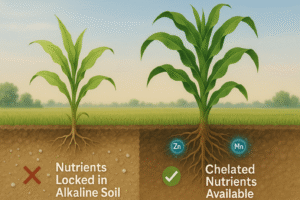
Even fertile soils can show deficiencies due to imbalance, high pH, or excessive use of major fertilizers.

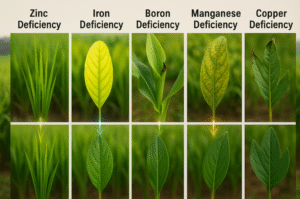
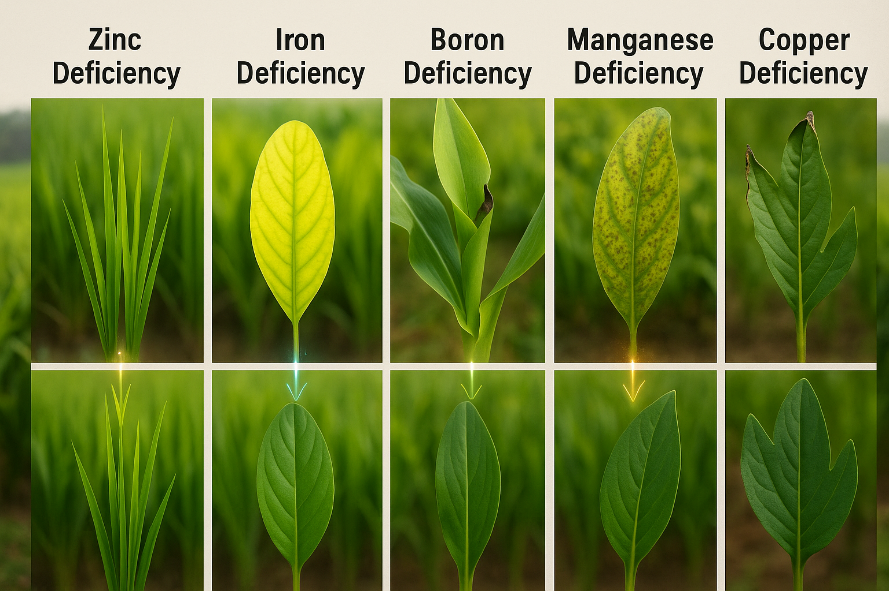
🔍 Common Micronutrient Deficiencies & Visual Symptoms

Zinc (Zn) Deficiency

Visible Signs:

  • Yellow or white stripes between veins on young leaves
  • Shortened plant height and reduced tillering
  • Narrow, pointed leaves

Correction:

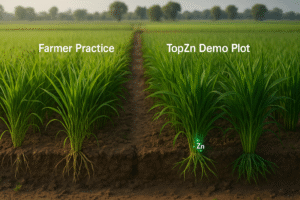
  • Soil application of zinc sulphate
  • Foliar spray of zinc-based micronutrients at early growth stages
Iron (Fe) Deficiency

Visible Signs:

  • Young leaves turn yellow while veins remain green
  • Severe cases show complete whitening of leaves
  • More common in alkaline and flooded soils

Correction:

  • Foliar spray of chelated iron
  • Improve drainage and organic matter in soil
Boron (B) Deficiency

Visible Signs:

  • Poor flowering and grain/fruit setting
  • Brittle leaves and stems
  • Hollow or deformed grains/fruits

Correction:

  • Apply boron in very small, recommended doses
  • Foliar spray during pre-flowering stage

Note: Excess boron can be toxic—always follow dosage guidelines.

Manganese (Mn) Deficiency

Visible Signs:

  • Yellowing between veins of young leaves
  • Grey or brown specks on leaves (speckling)
  • Reduced growth and weak plants

Correction:

  • Foliar application of manganese sulphate
  • Avoid over-liming of soil
Copper (Cu) Deficiency

Visible Signs:

  • Curling and drying of leaf tips
  • Weak stems and lodging
  • Poor grain filling

Correction:

  • Copper sulphate application at early crop stage
  • Balanced fertilization practices
Visual Diagnosis Tips for Farmers
  • Young leaves affected first → Fe, Zn, Mn deficiency
  • Flowers/grains affected → Boron deficiency
  • Patchy fields → localized micronutrient issues
  • Always compare healthy plants with affected plants in the same field
✅ Best Practices to Prevent Deficiencies
  • Conduct soil testing before each season
  • Use balanced fertilizers, not only NPK
  • Apply micronutrient mixtures suited to crop and region
  • Prefer foliar sprays for quick correction
  • Maintain good organic matter in soil
🌾 Conclusion

Micronutrient deficiencies act like “hidden hunger” in crops. By learning to identify visual symptoms early and applying the right corrective measures, farmers can protect yield, improve crop quality, and ensure sustainable farming. A simple visual check in the field can make a big difference.

📌 Healthy leaves today mean higher yields tomorrow.

Read latest blogs

Leave a Reply

Your email address will not be published. Required fields are marked *