❗ Problems with Alkaline Soils
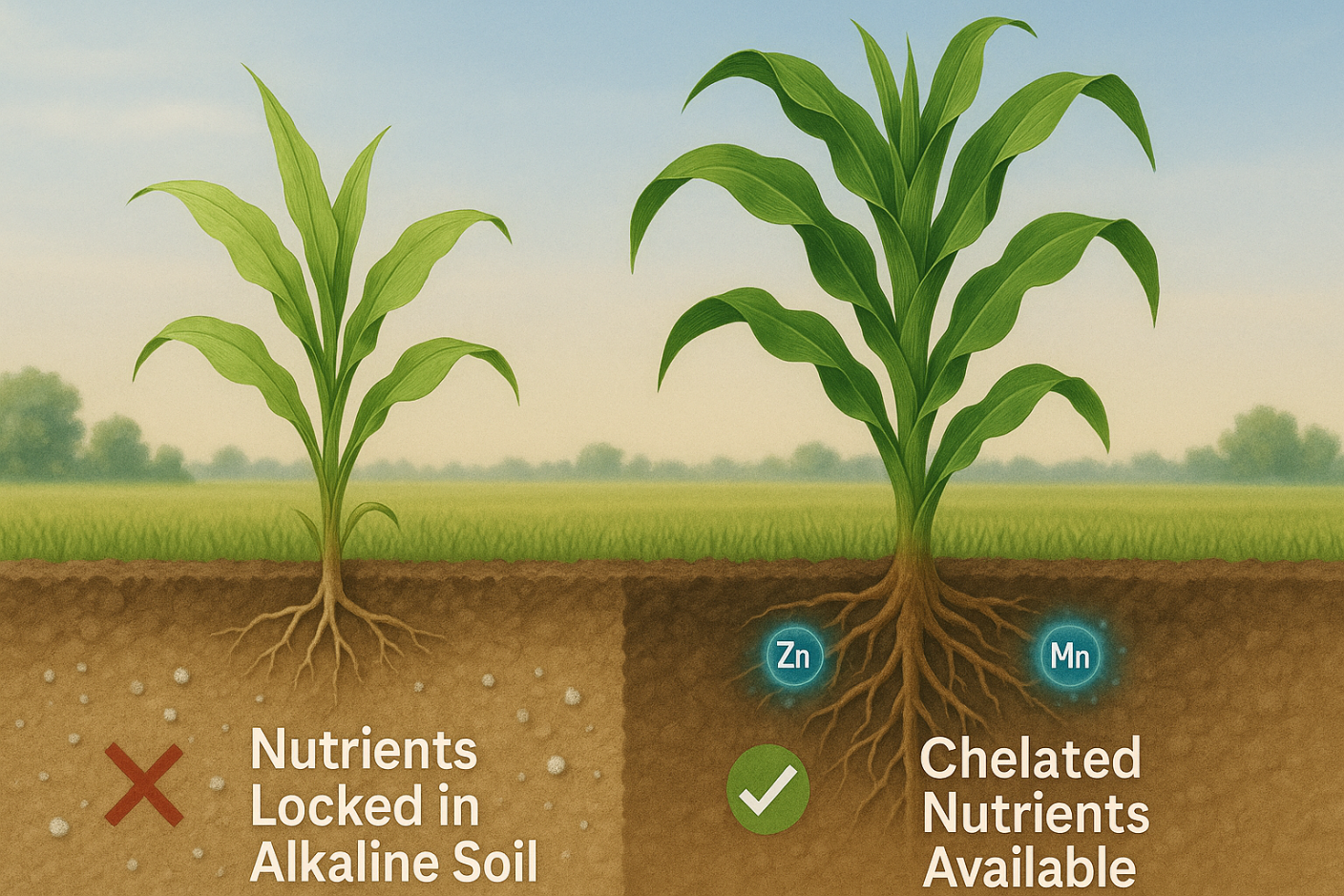
In alkaline soils (pH above 7.5):
- Iron and Zinc become insoluble
- Micronutrients get locked in the soil
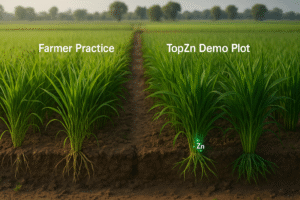
- Plants show yellowing, stunted growth, and poor yield
- Regular fertilizers give low response
Chelated forms help overcome these limitations.
✅ Key Benefits of Chelated Nutrients
Higher Nutrient Availability
Chelation prevents micronutrients from reacting with calcium and carbonates in alkaline soils, keeping them soluble and easily absorbable by plant roots.
Faster Correction of Deficiencies
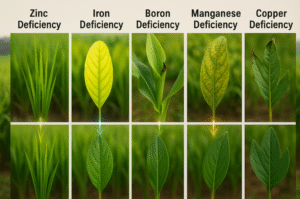
Chelated nutrients are quickly taken up by plants, making them ideal for correcting visible deficiency symptoms like iron chlorosis and zinc deficiency.
Better Root and Leaf Uptake
Chelated forms are effective through:
- Soil application
- Foliar spray
This flexibility ensures improved nutrient movement inside the plant system.
Improved Crop Growth & Yield
With balanced micronutrient supply:
- Chlorophyll production improves
- Photosynthesis becomes efficient
- Flowering and grain/fruit filling increase
- Overall crop vigor improves
Longer Nutrient Effect
Chelated nutrients remain stable in soil for a longer time compared to inorganic salts, reducing nutrient loss and minimizing frequent applications.
Effective at Low Dosage
Because of higher efficiency, chelated nutrients work effectively even at lower doses, making them economical in the long run.
🌾 Crops That Benefit Most
Chelated nutrients are especially useful for:
- Paddy, wheat, maize
- Vegetables (tomato, chilli, onion)
- Fruit crops (grapes, citrus, pomegranate)
- Oilseeds and pulses
📌 Best Practices for Using Chelated Nutrients
- Choose the right chelate type (EDTA, DTPA, EDDHA) based on soil pH
- Follow recommended dose and application timing
- Use soil testing to identify deficiencies
- Combine chelated micronutrients with balanced NPK fertilization
🌟 Conclusion
In alkaline soils, applying regular micronutrients may not be enough. Chelated nutrients ensure efficient delivery, better absorption, and visible improvement in crop health and yield. For farmers facing nutrient lock-up problems, chelated micronutrients are a smart and sustainable solution.
✅ Right form of nutrient makes all the difference.