
Foliar Feeding Best Practices for High-Value Vegetables

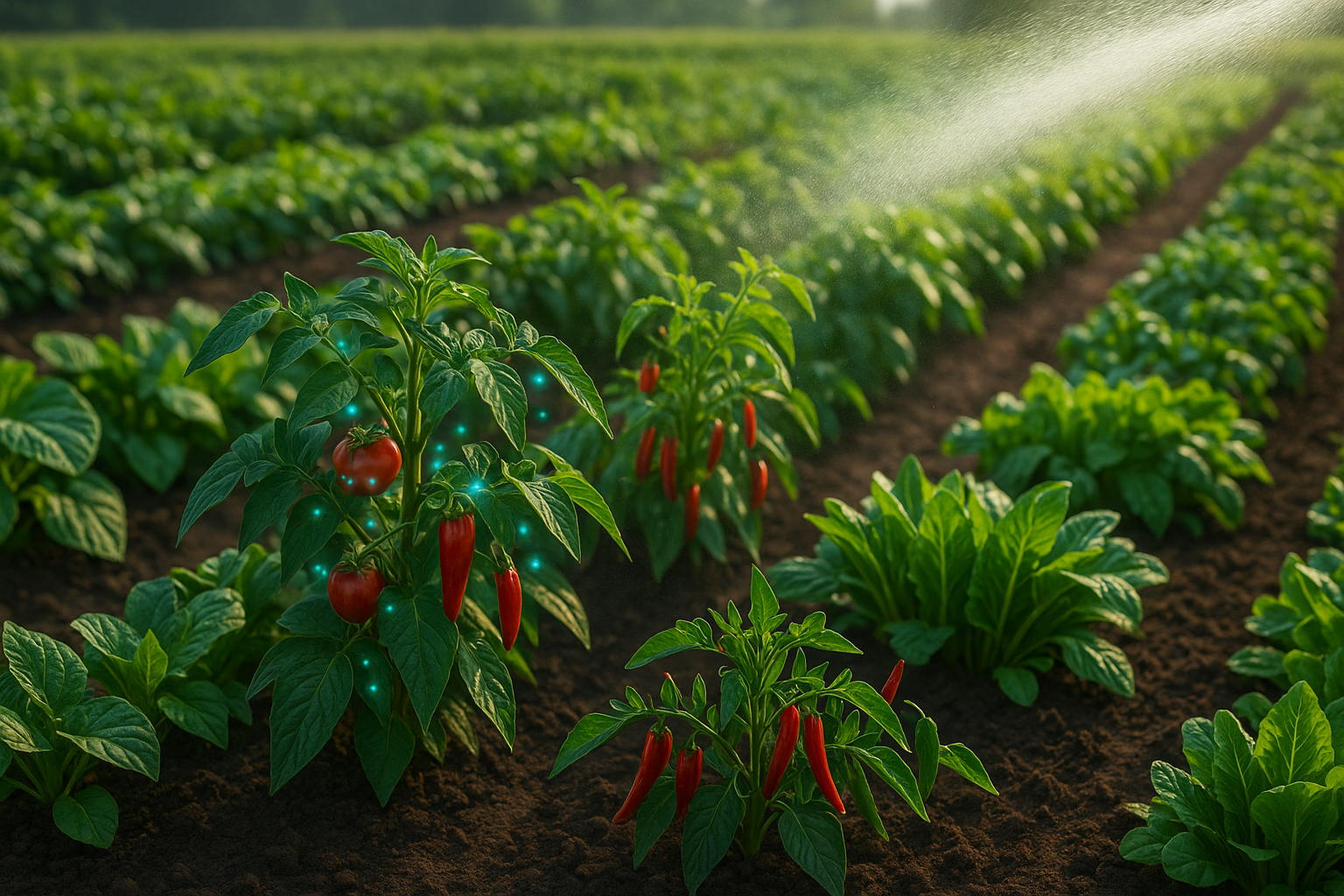
High-value vegetable crops like tomato, chilli, capsicum, cucumber, onion, leafy greens, and exotic vegetables require precise and timely nutrition to achieve premium quality and high market returns. Foliar feeding is one of the most effective methods to quickly supply essential nutrients directly to the plant foliage, especially during critical growth stages.

🌿 What Is Foliar Feeding?

Foliar feeding involves spraying nutrients directly onto plant leaves, where they are rapidly absorbed through stomata and leaf cuticles. This method bypasses soil-related nutrient losses and is ideal for correcting both macro- and micronutrient deficiencies.

✅ Key Benefits of Foliar Feeding
  • Faster nutrient uptake than soil application
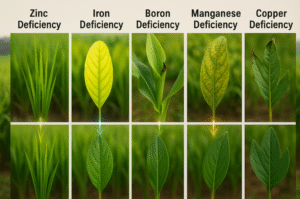
  • Quick correction of visible deficiencies
  • Improved flowering, fruit set, and uniform growth
  • Better nutrient efficiency with lower doses
  • Reduced soil nutrient lock-up
🧪 Best Nutrients for Foliar Feeding

Foliar sprays are most effective for:

  • Micronutrients: Zinc (Zn), Iron (Fe), Boron (B), Manganese (Mn), Calcium (Ca), Magnesium (Mg)
  • Secondary nutrients: Calcium and Magnesium for fruit firmness and photosynthesis
  • Biostimulants: Amino acids, seaweed extracts
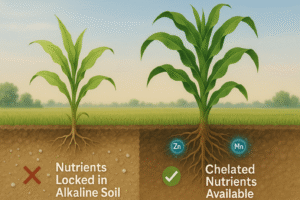
  • Chelated nutrients: Especially effective in alkaline soils
⏱️ Best Time for Foliar Application
  • Spray early morning (6–9 AM) or late evening (4–6 PM)
  • Avoid spraying during hot midday hours
  • Apply during calm weather with low wind
  • Do not spray before rain or irrigation
📆 Crop Stages Ideal for Foliar Feeding
  • Vegetative stage: Enhances leaf growth and vigor
  • Pre-flowering stage: Improves flower initiation
  • Flowering & fruit set: Reduces flower drop
  • Fruit development: Enhances size, color, and firmness
⚠️ Best Practices for Effective Foliar Feeding
  • Use recommended concentrations only (overdose can cause leaf burn)
  • Maintain correct spray solution pH (5.5–6.5)
  • Ensure uniform coverage on both sides of leaves
  • Use sticker-spreader for better absorption
  • Do not mix incompatible chemicals unless advised
🚫 Common Mistakes to Avoid
  • Over-concentration of nutrients
  • Spraying during high temperature or bright sunlight
  • Mixing pesticides without compatibility check
  • Repeated sprays at very short intervals
🌱 Crop-Specific Examples
  • Tomato: Calcium + Boron for blossom-end rot prevention
  • Chilli: Magnesium and micronutrients at flowering
  • Cucumber: Potassium and calcium during fruit development
  • Leafy vegetables: Iron and magnesium for dark green leaves
🌟 Conclusion

Foliar feeding is a powerful nutrition tool for high-value vegetable crops when used correctly. By following best practices—right nutrient, right stage, and right time—farmers can significantly improve yield, quality, shelf life, and profitability.

Precision nutrition leads to premium produce.

Read latest blogs

Leave a Reply

Your email address will not be published. Required fields are marked *