

Seasonal Nutrient Calendar for Paddy (Region-Specific Guide)
Successful paddy cultivation depends not only on good seeds and water management but also on supplying the right nutrients at the right time, based on the region and season. A well-planned seasonal nutrient calendar ensures healthy crop growth, optimum tillering, strong panicle formation, and higher yields.
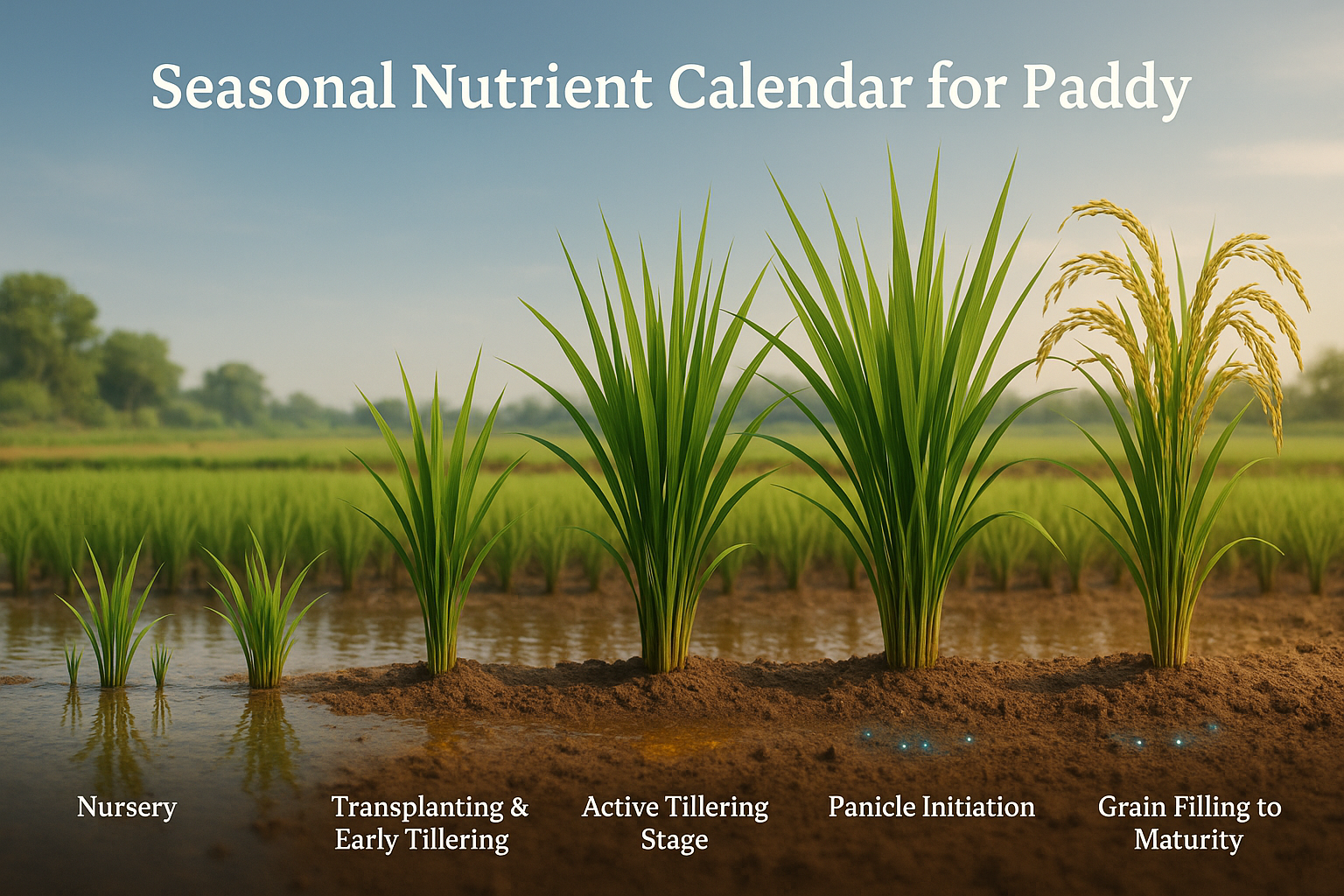
π± Nursery Stage (0β20 Days)
Across most paddy-growing regions, seedlings need quick and balanced nutrition.
- Apply micronutrients like Zinc (Zn), Iron (Fe), and Manganese (Mn) to promote strong root and shoot growth.
- Light nitrogen support helps uniform and vigorous seedlings.
πΏ Transplanting & Early Tillering (20β40 Days)
During transplanting, nutrient demand increases.
- Basal application of Nitrogen (N), Phosphorus (P), and Potassium (K) is essential.
- In regions with zinc-deficient soils (common in irrigated belts), zinc supplementation prevents leaf discoloration and stunted growth.
π Active Tillering Stage (40β60 Days)
This is a critical growth phase varying by climate.
- Split doses of Nitrogen improve tiller formation.
- Potassium strengthens stems and improves stress tolerance, especially in rainfed and coastal regions.
πΎ Panicle Initiation (60β80 Days)
For grain formation, balanced nutrition is crucial.
- Apply Nitrogen + Potassium for panicle development.
- Boron and Zinc help in better flowering and grain setting, particularly in high-yield varieties.
πΎ Grain Filling to Maturity (80 DaysβHarvest)
- Reduce nitrogen to avoid lodging.
- Adequate Potassium improves grain weight and quality.
- In cooler or late-season regions, foliar micronutrients support uniform grain filling.
β Region-Wise Planning Makes the Difference
Soil type, rainfall, and temperature differ from region to region. Farmers are encouraged to:
- Follow local soil test recommendations
- Adjust nutrient doses for Kharif, Rabi, or Summer paddy
- Use balanced fertilizers and micronutrients for sustainable yields
π Conclusion:
A region-specific seasonal nutrient calendar helps paddy farmers minimize nutrient losses, reduce costs, and achieve healthy crops with higher productivity. Right nutrition at the right stage is the key to profitable paddy farming.
Read latest blogs
Case Study: Demo Plot Yield Improvement with TopZn
Case Study: Demo Plot Yield Improvement with TopZn Background Micronutrient...
Read MoreFoliar Feeding Best Practices for High-Value Vegetables
Foliar Feeding Best Practices for High-Value Vegetables High-value vegetable crops...
Read MoreBenefits of Chelated Nutrients in Alkaline Soils
Benefits of Chelated Nutrients in Alkaline Soils Alkaline soils are...
Read MoreHow to Identify and Correct Micronutrient Deficiencies (Visual Guide for Farmers)
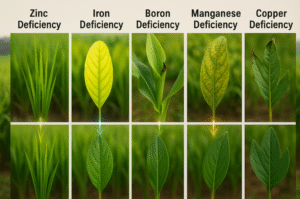
How to Identify and Correct Micronutrient Deficiencies (Visual Guide for...
Read More